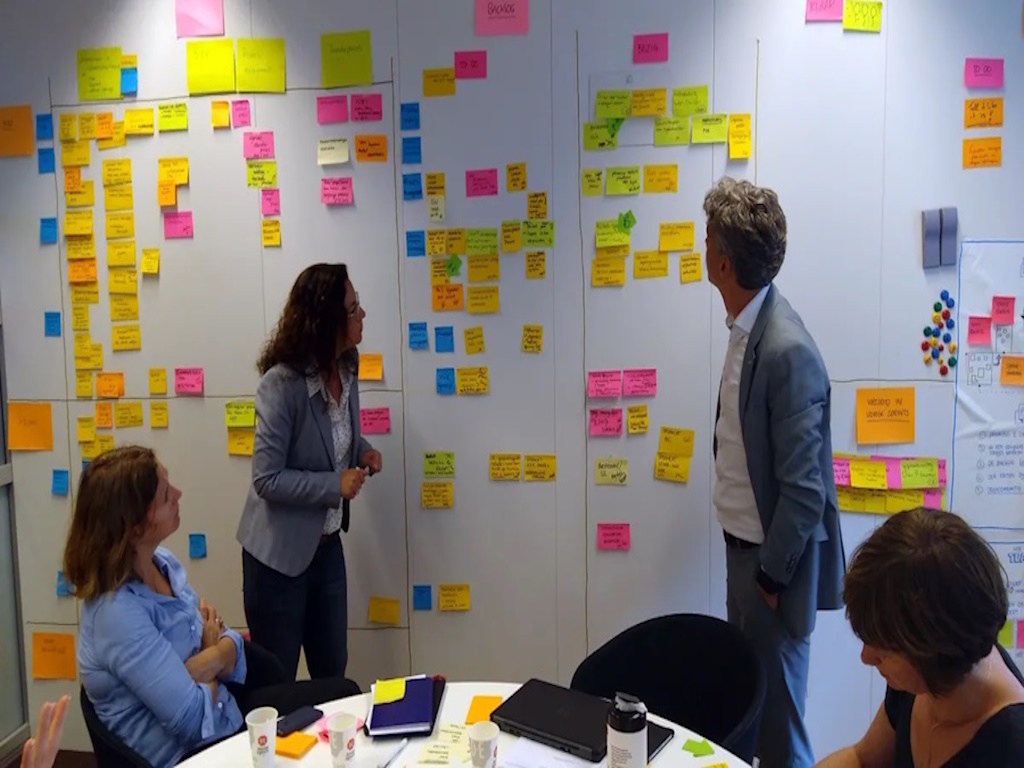
The Scrum Guide
Ken Schwaber & Jeff Sutherland are the leading Agile evangelists and the originators of Scrum Framework. They developed Scrum in the early 1990s and wrote the first version of the Scrum Guide in 2010 to help people worldwide understand Scrum. Thet have been following the growing use of Scrum Framework within an ever-growing complex world, and pleased with what they have seen, they have written an update to the Scrum Guide. Let's see what they have come up with this time.
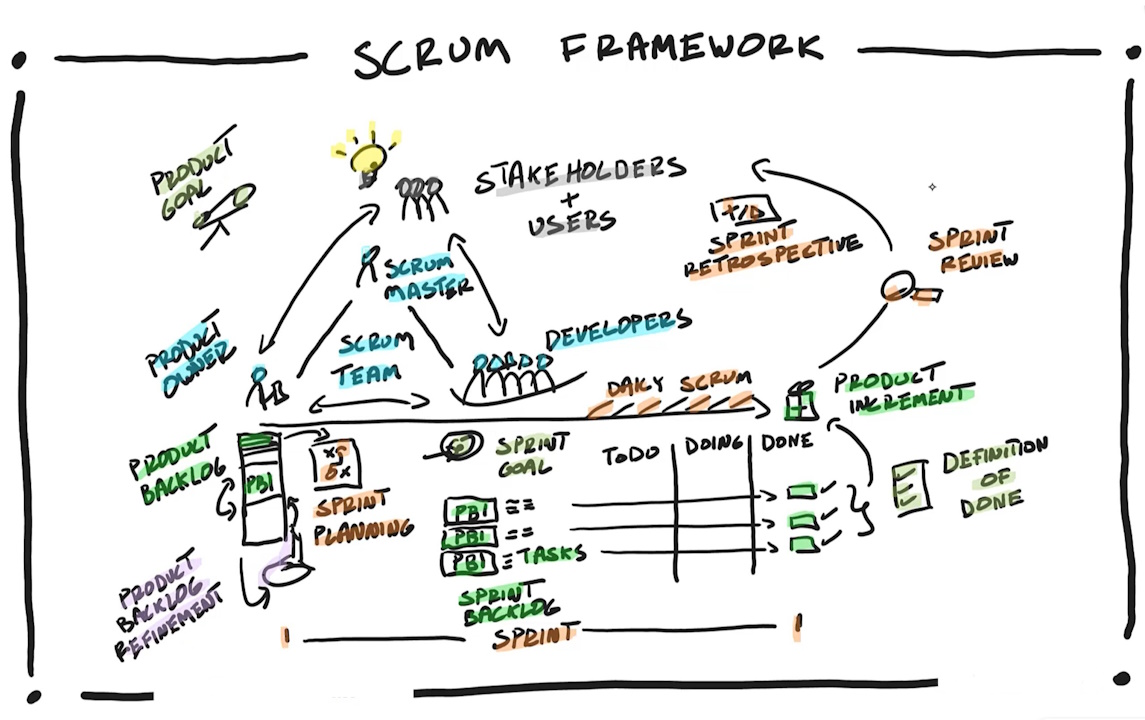
Ken and Jeff emphasize that Scrum is a lightweight framework that helps people, teams and organizations generate value through adaptive solutions for complex problems. In a nutshell, Scrum requires a Scrum Master to foster an environment where:
- A Product Owner orders the work for a complex problem into a Product Backlog
- The Scrum Team turns a selection of the work into an Increment of value during a Sprint
- The Scrum Team and its stakeholders inspect the results and adjust for the next Sprint
- Repeat.
Scrum is founded on empiricism and lean thinking. Empiricism asserts that knowledge comes from experience and making decisions based on what is observed. Lean thinking reduces waste and focuses on the essentials. Scrum employs an iterative, incremental approach to optimize predictability and to control risk. Scrum engages groups of people who collectively have all the skills and expertise to do the work and share or acquire such skills as needed.
Scrum Values
Ken and Jeff come to the conclusion that successful use of Scrum depends on people becoming more proficient in living five values:
- Commitment
- Focus
- Openness
- Respect
- Courage.
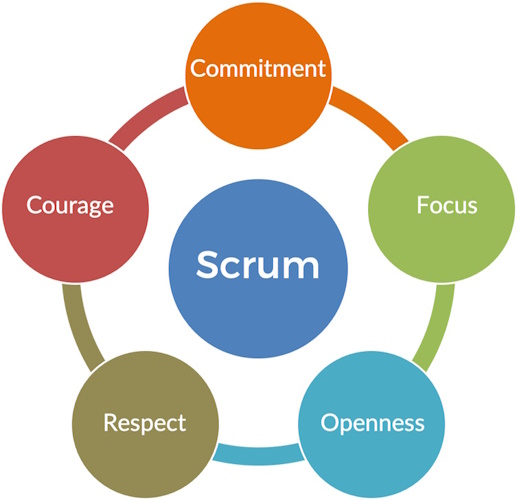
The Scrum Team commits to achieving its goals and to supporting each other. Their primary focus is on the work of the Sprint to make the best possible progress toward these goals. The Scrum Team and its stakeholders are open about the work and the challenges. Scrum Team members respect each other to be capable, independent people, and are respected as such by the people with whom they work. The Scrum Team members have the courage to do the right thing, to work on tough problems. These values give direction to the Scrum Team with regard to their work, actions, and behavior. The decisions that are made, the steps taken, and the way Scrum is used should reinforce these values, not diminish or undermine them. The Scrum Team members learn and explore the values as they work with the Scrum events and artifacts. When these values are embodied by the Scrum Team and the people they work with, the empirical Scrum pillars of transparency, inspection, and adaptation come to life building trust.
"Scrum is like your mother-in-law, it points out ALL your faults."
Ken Schwaber
Scrum Events
The Sprint is a container for all other events. Each event in Scrum is a formal opportunity to inspect and adapt Scrum artifacts. These events are specifically designed to enable the transparency required. Failure to operate any events as prescribed results in lost opportunities to inspect and adapt. Events are used in Scrum to create regularity and to minimize the need for meetings not defined in Scrum. Optimally, all events are held at the same time and place to reduce complexity.
The Sprint
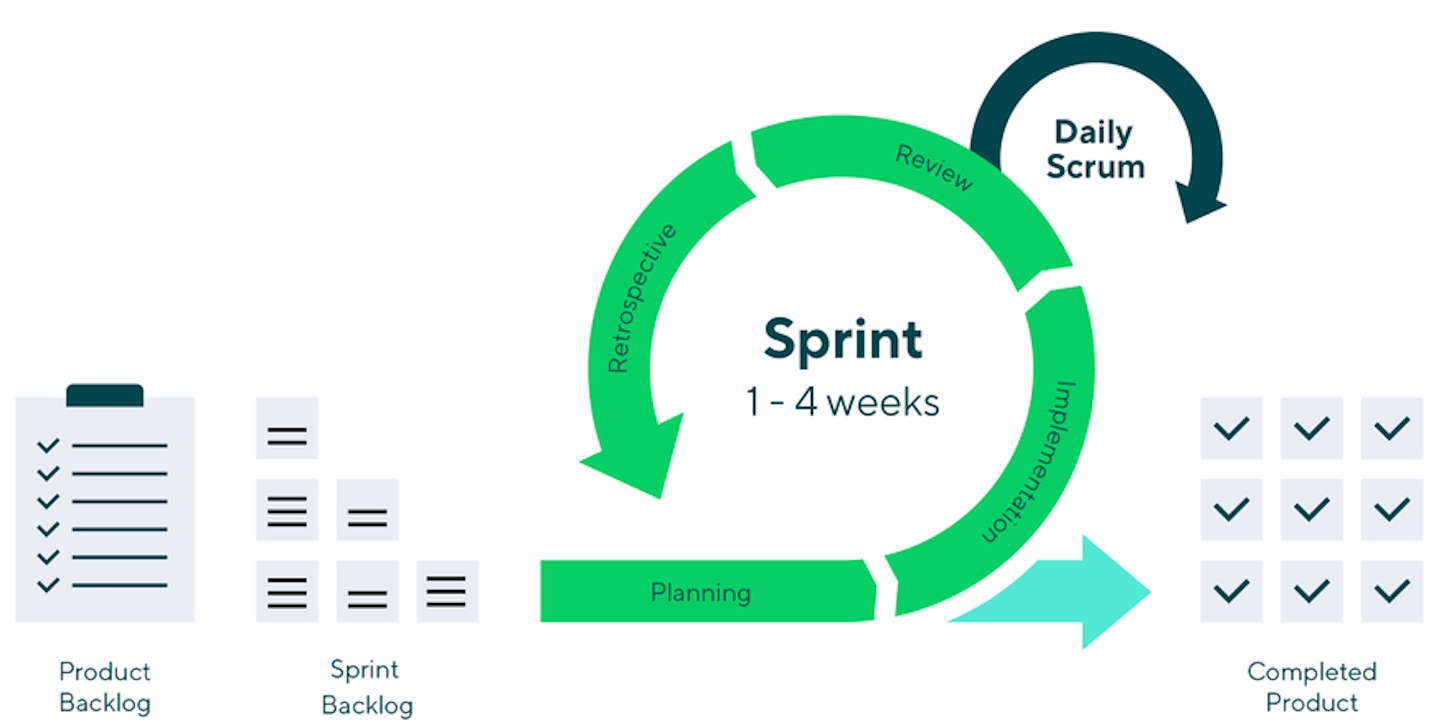
Sprints are the heartbeat of Scrum, where ideas are turned into value. They are fixed length events of one month or less to create consistency. A new Sprint starts immediately after the conclusion of the previous Sprint. All the work necessary to achieve the Product Goal, including Sprint Planning, Daily Scrums, Sprint Review, and Sprint Retrospective, happen within Sprints. During the Sprint:
- No changes are made that would endanger the Sprint Goal
- Quality does not decrease
- The Product Backlog is refined as needed
- Scope may be clarified and renegotiated with the Product Owner as more is learned.
Sprints enable predictability by ensuring inspection and adaptation of progress toward a Product Goal at least every calendar month. When a Sprint’s horizon is too long the Sprint Goal may become invalid, complexity may rise, and risk may increase. Shorter Sprints can be employed to generate more learning cycles and limit risk of cost and effort to a smaller time frame. Each Sprint may be considered a short project.
Various practices exist to forecast progress, like burn-downs, burn-ups, or cumulative flows. While proven useful, these do not replace the importance of empiricism. In complex environments, what will happen is unknown. Only what has already happened may be used for forward-looking decision making. A Sprint could be cancelled if the Sprint Goal becomes obsolete. Only the Product Owner has the authority to cancel the Sprint.
Sprint PlanningA sprint would only be a failure if the team didn’t deliver anything and didn’t learn from it.
Mike Cohn
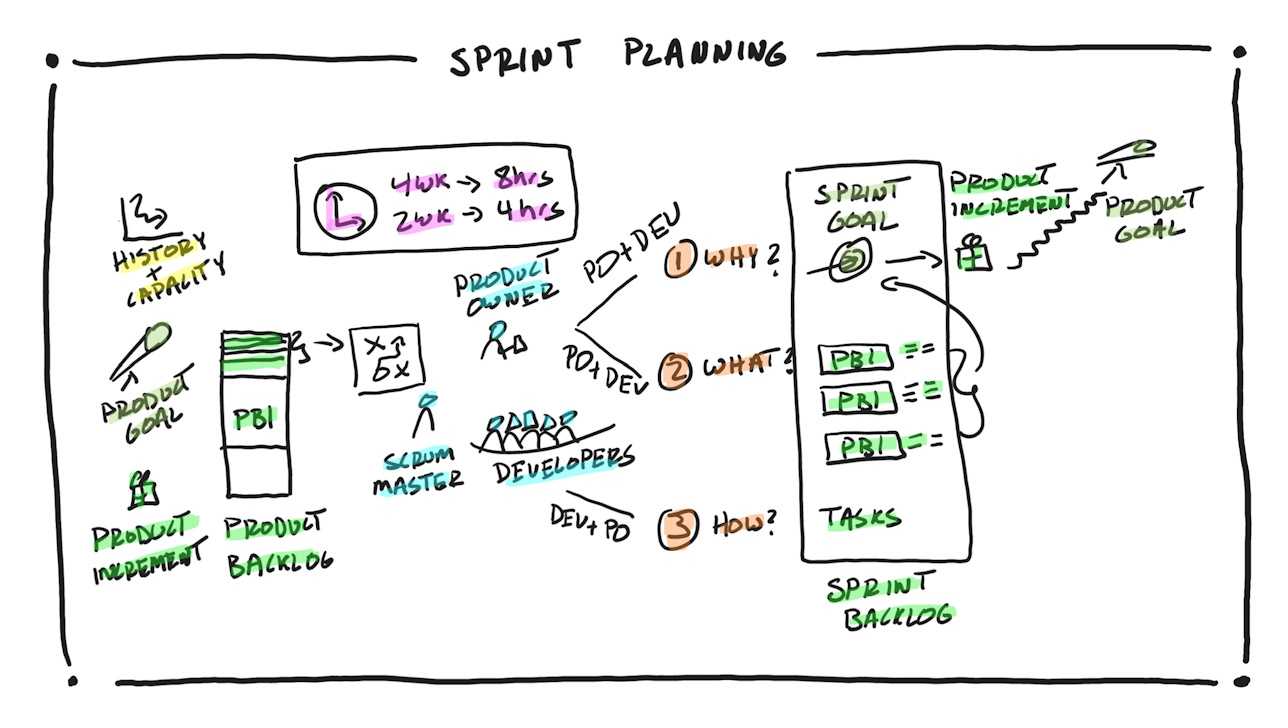
Sprint Planning initiates the Sprint by laying out the work to be performed for the Sprint. This resulting plan is created by the collaborative work of the entire Scrum Team. The Product Owner ensures that attendees are prepared to discuss the most important Product Backlog items and how they map to the Product Goal. The Scrum Team may also invite other people to attend Sprint Planning to provide advice. Sprint Planning is timeboxed to a maximum of eight hours for a one-month Sprint. For shorter Sprints, the event is usually shorter.
 Daily Scrum
The purpose of the Daily Scrum is to inspect progress toward the Sprint Goal and adapt the Sprint Backlog as necessary, adjusting the upcoming planned work. The Daily Scrum is a 15-minute event for the Developers of the Scrum Team. To reduce complexity, it is held at the same time and place every working day of the Sprint. If the Product Owner or Scrum Master are actively working on items in the Sprint Backlog, they participate as Developers.
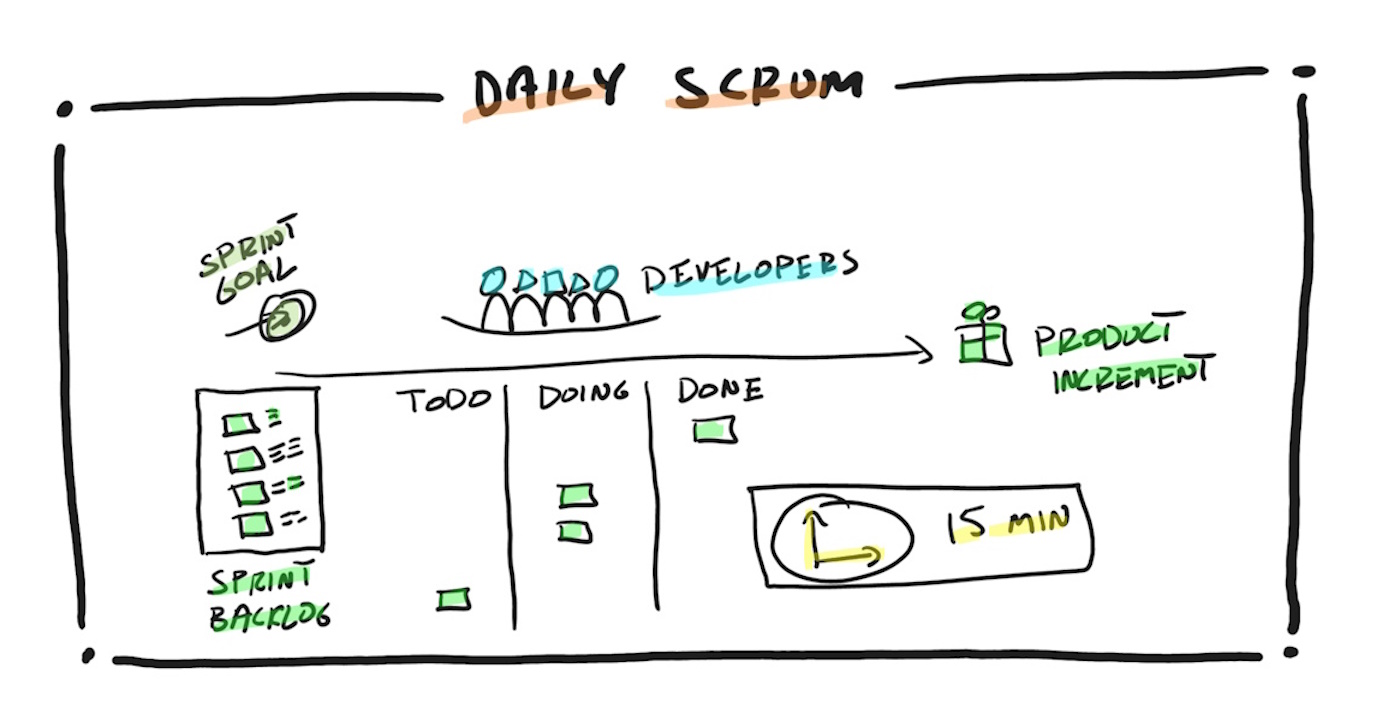
The Developers can select whatever structure and techniques they want, as long as their Daily Scrum focuses on progress toward the Sprint Goal and produces an actionable plan for the next day of work. This creates focus and improves self-management. Daily Scrums improve communications, identify impediments, promote quick decision-making, and consequently eliminate the need for other meetings. The Daily Scrum is not the only time Developers are allowed to adjust their plan. They often meet throughout the day for more detailed discussions about adapting or re-planning the rest of the Sprint’s work.
Sprint Review
The purpose of the Sprint Review is to inspect the outcome of the Sprint and determine future adaptations. The Scrum Team presents the results of their work to key stakeholders and progress toward the Product Goal is discussed. During the event, the Scrum Team and stakeholders review what was accomplished in the Sprint and what has changed in their environment. Based on this information, attendees collaborate on what to do next. The Product Backlog may also be adjusted to meet new opportunities. The Sprint Review is a working session and the Scrum Team should avoid limiting it to a presentation.
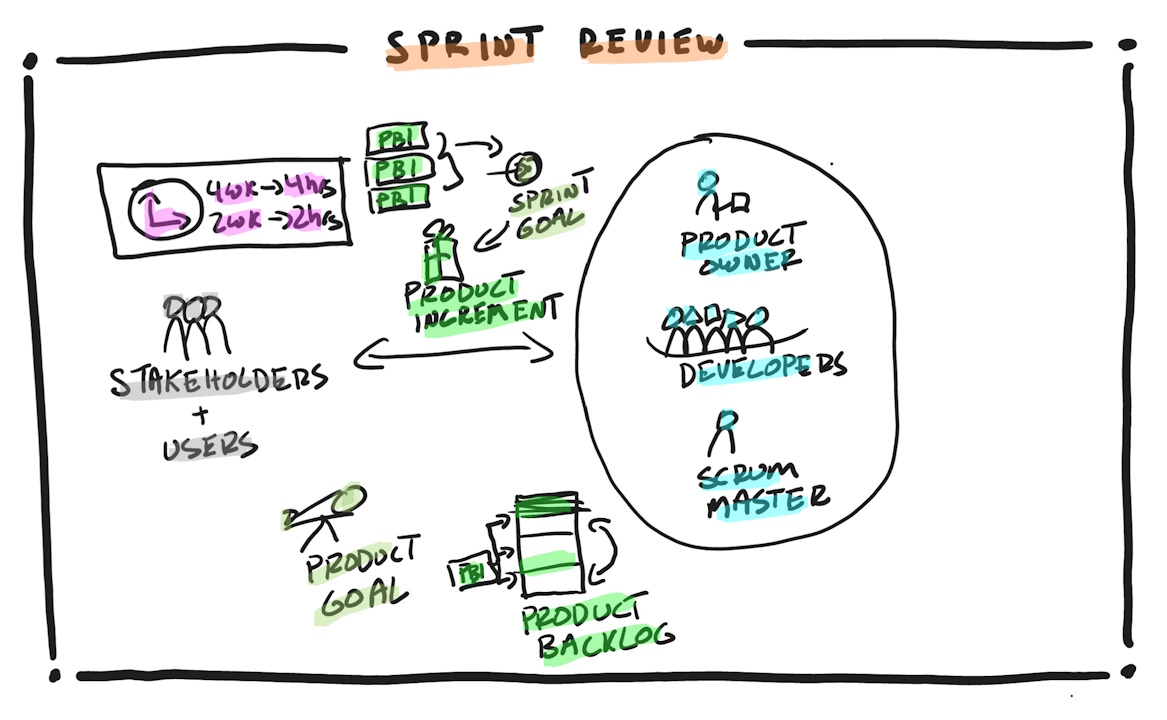
The Sprint Review is the second to last event of the Sprint and is timeboxed to a maximum of four hours for a one-month Sprint. For shorter Sprints, the event is usually shorter.
Sprint Retrospective
The purpose of the Sprint Retrospective is to plan ways to increase quality and effectiveness. The Scrum Team inspects how the last Sprint went with regards to individuals, interactions, processes, tools, and their Definition of Done. Inspected elements often vary with the domain of work. Assumptions that led them astray are identified and their origins explored. The Scrum Team discusses what went well during the Sprint, what problems it encountered, and how those problems were solved. The Scrum Team identifies the most helpful changes to improve its effectiveness. The most impactful improvements are addressed as soon as possible. They may even be added to the Sprint Backlog for the next Sprint.
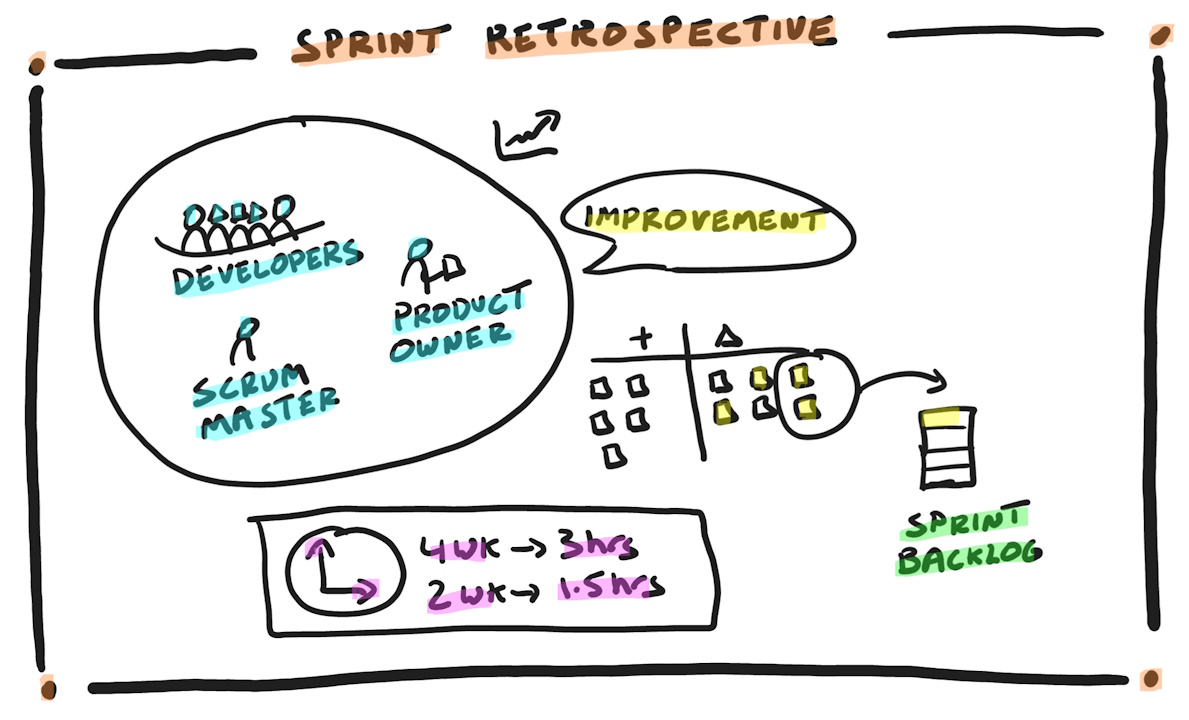
The Sprint Retrospective concludes the Sprint. It is timeboxed to a maximum of three hours for a one-month Sprint. For shorter Sprints, the event is usually shorter.
In conclusion, comparing this with the previous versions, the new update of the Scrum Guide contains a refreshing refining of the Scrum Framework from the decade ago.